Roof Repair or Full Replacement? How the Decision Actually Gets Made
The line between fixing a section and replacing the whole roof is usually clearer than it feels standing on the ground looking up.
September 9, 2026 · 3 min read
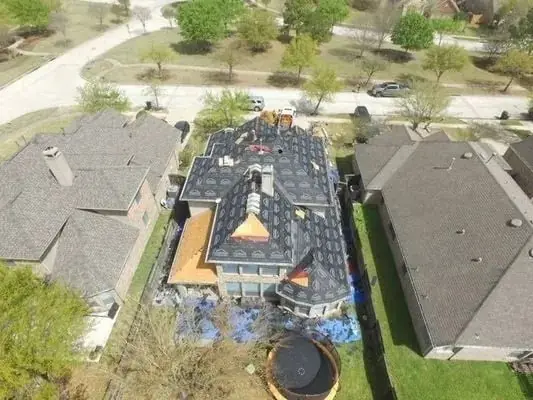
A leaking roof doesn't always mean the whole roof has to come off. That surprises people, because a stain spreading across the ceiling feels like a big problem, and a big problem feels like it should have a big solution. Most of the time it doesn't. What actually decides repair versus replacement is a handful of specific things an inspector can point to on the roof itself, not the size of the water stain in your living room.
Start with what's actually failing
A leak is usually a symptom, not a diagnosis on its own. It could be a flashing seal that's cracked around a chimney or vent pipe, a handful of shingles blown loose in the last storm, or a valley where two roof planes meet that's wearing faster than the rest of the field. Those are repair situations. The roof around the failure point is still doing its job; one specific component simply isn't, and swapping that component out solves the problem.
What changes the picture is when the problem isn't isolated to one spot: granule loss spread across most of the field, decking that's gone soft in more than one location, or a shingle type that's simply reached the end of what it can reasonably do. At that point, patching one leak just buys a few months of quiet before the next failure shows up somewhere else on the same roof, and you end up paying for the repair twice.
What a rushed patch job can miss
A repair done quickly by someone who isn't looking past the immediate leak point can miss what actually caused it. Replacing a section of shingles without checking the flashing underneath, or resealing a vent boot without checking whether the decking around it has already started to soften, just delays the same leak by a season instead of solving it. That's the real difference between a repair that holds and one that quietly reappears the next time it rains hard, and it's exactly why a proper inspection looks at the area surrounding a leak, not only the spot where water first showed up inside the house.
Age is a real factor, even without a visible leak
The National Association of Home Builders puts the typical lifespan of a newly installed asphalt shingle roof at roughly 20 years. That's not a hard deadline where the roof suddenly stops working on the day it hits twenty, but it's a useful marker for how a contractor thinks about a repair. A roof at year eight with an isolated flashing failure is a straightforward repair. A roof at year twenty two with the same exact failure is a different conversation entirely, because if one component out there is wearing out on schedule, the rest of the field is running on the same clock right behind it.
The signs that point toward replacement
- Moisture spots on the ceiling that reappear in different locations even after dry weather
- Shingles that are blistering or curling across multiple sections, not just one
- Visible signs of roof deck decay or sagging in more than one spot
- Water accumulating in the eaves rather than draining off the roof cleanly
- A steady rise in energy bills with no other clear explanation
- Mold or algae growth spreading across a noticeable portion of the roof surface
Who actually makes the call, and how
This shouldn't be a guess made from the driveway. A proper inspection gets someone up on the roof, or at minimum close enough to check the deck, the flashing points, and the condition of the field directly, not just the parts that happen to be visible with binoculars from the yard below. Ameristar Roofing & Restoration offers a free, no-obligation inspection for exactly this reason: the goal of the first visit is an honest answer about what's actually going on, not a sales pitch angled toward the bigger job.
If a storm is involved, an experienced contractor will also document what they find in a way that holds up if you end up filing an insurance claim, since Ameristar works with most major insurance providers to help homeowners through that process from start to finish. But the repair-versus-replacement decision itself always comes down to the roof's actual condition up close, not the size of the stain on your ceiling or how worried you are standing underneath it. Get someone up there who can tell you plainly which one you're actually looking at, and why.
Ameristar Roofing & Restoration, (281) 238-4230
Call (281) 238-4230More articles
What "CertainTeed Select ShingleMaster" Actually Means for Your Roof
Manufacturer credentials aren't a marketing sticker. They come with training requirements, and they're what makes a stronger warranty possible in the first place.
What Actually Happens During a Hail Damage Insurance Claim
Hail bruises a shingle without necessarily tearing it, which is exactly why the contractor documenting the damage matters as much as the damage itself.